
Last updated November 15, 2026
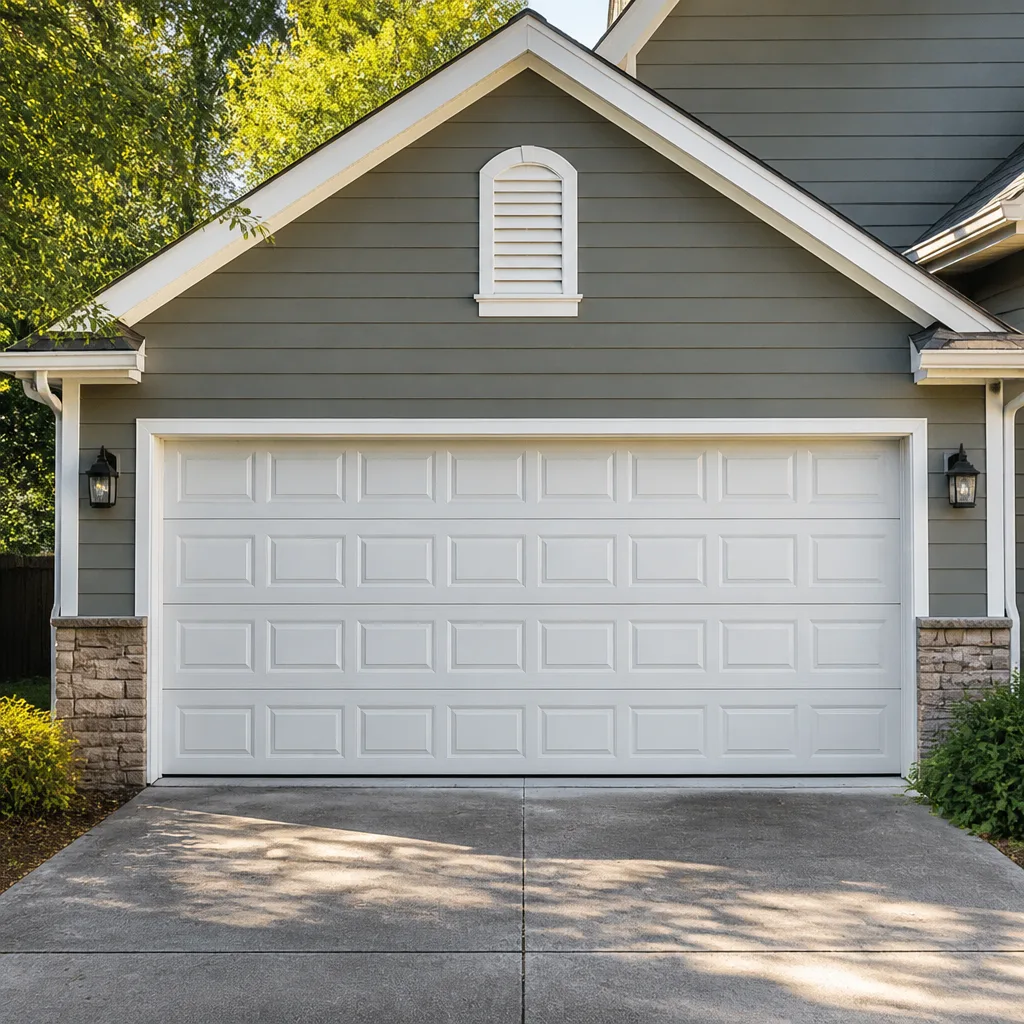 Raised-panel steel
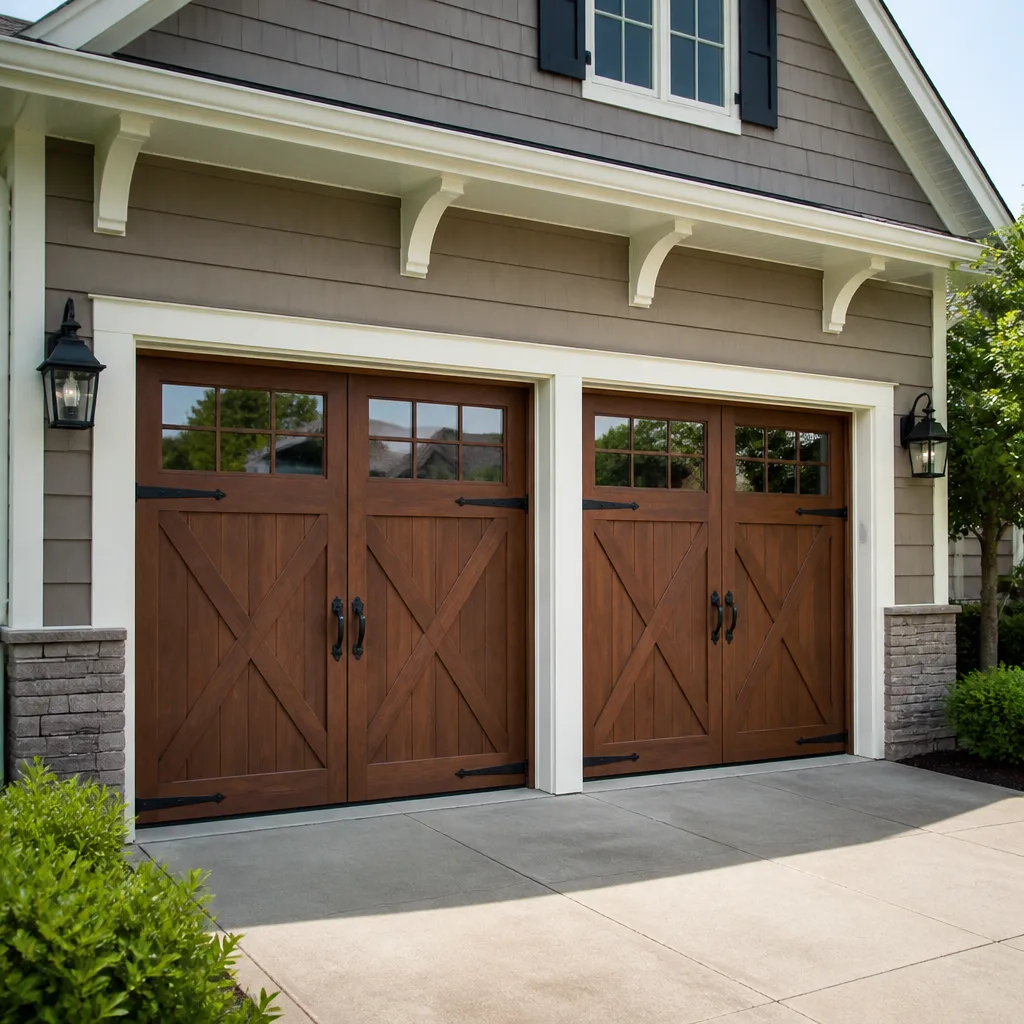 Carriage house
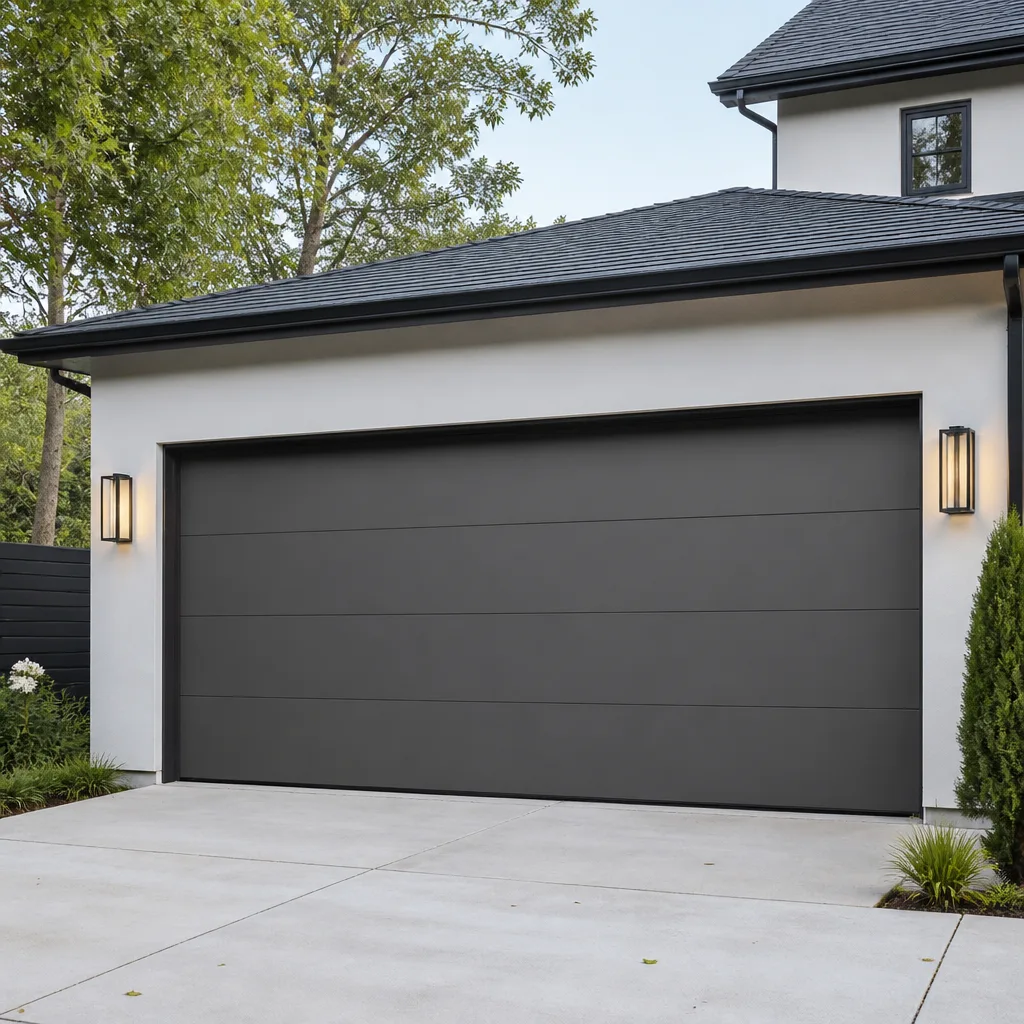 Modern flush
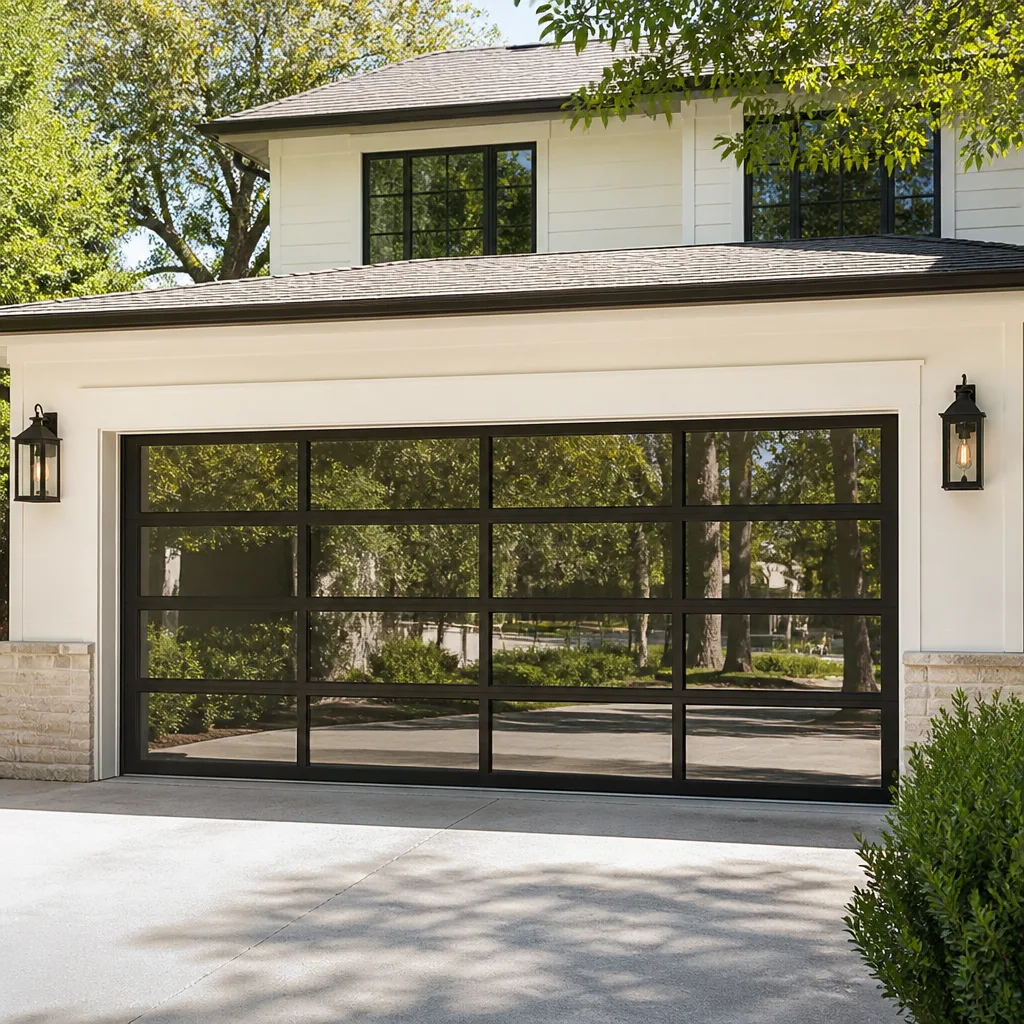 Full-view glass
 LiftMaster openers
 Chamberlain openers
Full 25-point door and opener safety check with every visit - springs, cables, rollers, tracks, and your LiftMaster or Chamberlain opener included
You get a price before we start. It does not change when the pro arrives.
Get your free estimateGarage Door Repair Maintenance Checklist for Mobile Homeowners
The number one thing that makes a garage door fail early in Mobile isn’t neglect. It’s doing the right maintenance at the wrong time of year. We see it constantly: homeowners who faithfully lubricate their springs every spring, who tighten everything in April, and who still end up with a snapping cable in August or a door that won’t reverse in the middle of hurricane season. The calendar matters here. Mobile’s humidity, heat, storm cycle, and the way it swings from damp winters to furnace-hot summers put very specific demands on door hardware, and a generic quarterly checklist ignores all of it. In this guide, we’ve organized a maintenance plan around the real seasonal stressors in Mobile, and we’ll separate the jobs you can safely do from the jobs that will put you in the emergency room if you try.
Quick Answer
A proper garage door maintenance checklist for Mobile should be seasonal, not quarterly: inspect cables, anchor bolts, and the manual release before hurricane season, check springs and rollers for early rust after the humid summer, and lubricate with a silicone or lithium-based product rather than standard WD-40. Test the balance and safety reversal on a hot day, since heat expansion changes both readings. Anything involving springs, cables under tension, or the torsion system belongs to a trained technician, not a homeowner.
Styles & brands we work with
- Raised-panel steel
- Carriage house
- Modern flush
- Full-view glass
- LiftMaster openers
- Chamberlain openers
Table of Contents
- Why Timing Matters More Than Effort in Mobile
- Pre-Hurricane Season Checklist for Mobile
- Post-Summer Humidity Check: Catching Rust Before It’s a Repair
- Lubrication Product Selection for a Humid Climate
- Testing Balance and Reversal Sensitivity on a Hot Day
- What You Can Safely Do Yourself vs. What Needs a Technician
- The Cooler Months: What to Check Between Storms
- Brand-Specific Notes for Mobile Doors
Why Timing Matters More Than Effort in Mobile
A garage door is a machine of balanced tension. Springs pull, cables hold, rollers guide, and an opener does a small, consistent push. Every one of those parts responds to temperature and moisture, and Mobile hands out both in extremes. A door that runs perfectly in January tells you very little about how it will behave in July, when heat has expanded the metal track, thinned the grease, and left the springs working at a different load than they were rated for.
The seasonal swing in Mobile is the real variable. We get long humid stretches where condensation sits on steel overnight and dries by noon, then dries and wets again the next day. That wet-dry cycling is what eats springs and rollers from the outside in, and it happens fastest in late summer. Then comes hurricane season, when the door stops being a convenience and becomes part of the building envelope. A door that runs fine in calm weather can still be the weakest point in a wind event if the track is loose, the anchor bolts have backed out, or the manual release won’t budge.
So the plan isn’t “maintain the door four times a year.” The plan is: get the structure and safety systems tight before the storms arrive, watch the moving metal closely as the humidity peaks, and use the calmer months to fix what you found. Done in that order, a garage door in Mobile lasts longer and fails less dramatically.
Pre-Hurricane Season Checklist for Mobile
Think of this as the pre-storm walk-around. It’s the highest-value maintenance you’ll do all year in Mobile, and it’s mostly inspection rather than repair. Do it before the season ramps up, while a technician can still get to you on a normal schedule instead of during a rush.
- Cable tension check (visual only). Look at the cables running along each side of the door. They should be taut, straight and free of fraying, kinks or bird-caging. Slack or a fuzzy, frayed look means a cable is failing. Do not touch, tighten or adjust them yourself; cables are under serious tension and are one of the most dangerous parts of the whole system.
- Anchor bolt inspection. The track and the torsion assembly are bolted to the framing. Look for bolts that have backed out, rusted heads, or gaps where the bracket has pulled away from the wood. A loose anchor turns a wind load into a leverage problem, and it’s the kind of thing a technician can torque down or re-secure before a storm.
- Manual release function. Pull the red release handle (with the door fully down and nobody underneath) and confirm the door disengages from the opener cleanly. Then re-engage it. If the release is stiff, rusted, or the door won’t re-latch, that’s a real problem: in a power outage, the manual release is how you get the door open.
- Track alignment and roller seating. Run the door up and down and watch the rollers. They should stay seated in the track without jumping, and the door shouldn’t shimmy or rub. A bent track section will only get worse under storm-season temperature swings.
- Weather seal and bottom seal. Check the rubber seal along the bottom and the sides. Cracks or missing chunks let water and wind-driven rain in, and they’re cheap to replace before the season rather than after.
- Opener force and reversal test. Confirm the door reverses when it meets an obstruction (more on how to do this safely below). A door that fails this test is a safety problem, not just a convenience problem.
Post-Summer Humidity Check: Catching Rust Before It’s a Repair
By late summer in Mobile, the door has been through months of heat and moisture, and that’s when rust starts. Not the obvious orange flakes on a hinge, but the fine surface rust that shows up first on springs and roller stems. Catching it there is the difference between a cleaning and lubrication job and a spring or roller replacement.
Here’s what to look for, in order of urgency:
- Springs: Look for a fine reddish-brown dust or pitting on the coils. Springs are under constant tension, and rust eats into the wire where it flexes. Surface rust is a warning; a visibly pitted or thinning coil means the spring is on its way out and should be assessed by a technician before it breaks.
- Rollers: Rusty roller stems and stiff wheels are extremely common in Mobile after a humid summer. A roller that no longer spins freely drags on the track and strains the opener. These are usually inexpensive to replace and worth doing early.
- Hinges and fasteners: Rust on hinge plates and bolts is cosmetic until it seizes the hinge. A quick clean and a proper lubricant keeps them moving.
- Track and bottom brackets: Light surface rust is normal; heavy flaking or rust-through near the floor is a sign the door needs a closer look.
The fix for early rust is straightforward: clean the affected parts, remove loose rust with a light abrasive, and apply a proper garage door lubricant. The trick is doing it as soon as you see the first sign, not waiting for the next annual check. Once a spring starts pitting, no amount of lubricant brings it back. If you’re not sure whether what you’re seeing is surface rust or structural wear, that’s a good moment to have a technician look at it during a routine garage door repair visit.
Lubrication Product Selection for a Humid Climate
This is where a lot of Mobile homeowners go wrong, and it usually isn’t their fault. Standard WD-40 is the can in almost every garage, and it’s the wrong call for a garage door in this climate. WD-40 is a water-displacing solvent, not a lasting lubricant. On a garage door it cuts through old grease, thins out within days in the heat, and leaves the moving parts drier than before. It also attracts dust, which turns into a gritty paste on rollers and hinges.
What actually works in high humidity:
- Silicone-based spray lubricant for hinges, rollers, and the torsion bar bearings. It doesn’t attract dust and it holds up in heat.
- White lithium grease for the track where the rollers ride and for the opener rail. It’s heavier, stays put, and handles the humidity that makes lighter products run off.
- Do not lubricate the springs with a heavy grease unless a technician recommends it for your specific setup. Springs are usually better left clean or lightly treated with a product made for them.
- Never lubricate the inside of the track where the door rides on a track-mounted roller with anything thick; a light silicone film is enough. A sticky track causes more problems than a dry one.
The right routine for Mobile is a light application two or three times a year, timed to the seasons: once before summer’s humidity peaks, once after it, and once in the cooler months. A little goes a long way. If the door starts squealing again within a couple of weeks, that’s usually a sign of a mechanical problem (a bent roller, a worn hinge, a failing bearing) rather than a lubrication problem, and it’s worth a look.
Testing Balance and Reversal Sensitivity on a Hot Day
Here’s the part most generic checklists miss. In Mobile, you should test the door’s balance and reversal when it’s hot, not on a cool morning. Heat expands metal, and a door that balances perfectly at 70 degrees can feel noticeably heavier or lighter on a 95-degree afternoon. The point of testing in the heat is not that warm readings are “wrong.” It’s that the door has to work safely in the conditions it actually operates in.
How to test balance (safely):
- With the door closed and the opener disconnected via the manual release, lift the door about halfway by hand and let go.
- A properly balanced door should stay roughly where you left it, maybe drifting slowly. If it drops hard or won’t lift without real effort, the springs are out of balance or worn.
- Do this test when the door has been in the sun or the garage has had time to heat up. Note how it behaves compared to a cool morning.
How to test the reversal: With the door connected to the opener, place a firm object (a roll of paper towels or a piece of wood about 2 inches tall) in the door’s path and close it. The door should reverse on contact. Many openers also have a light-beam safety sensor at the floor; break the beam and the door should reverse too. Test both. If the door stops but doesn’t reverse, or if it pushes hard on the object before giving up, the force setting needs attention.
Both of these tests reveal problems, but they don’t fix them. Adjusting the opener’s force settings or balancing a door with worn springs is skilled work, and it’s the kind of thing that gets dangerous fast. If your balance or reversal test fails, that’s a job for a technician. Our team can look at it during an opener repair call, since most reversal and force issues trace back to the opener or the spring system rather than the door itself.
What You Can Safely Do Yourself vs. What Needs a Technician
We’d rather you know exactly where the line is than guess. Most of the maintenance that matters can be done by a careful homeowner. The line we ask you not to cross is the one around everything under mechanical tension.
Safe for you to do:
- Visual inspection of cables, springs, rollers, hinges, and the track.
- Lubricating hinges, rollers, and the opener rail with the right products.
- Wiping down surface rust and treating it with a rust inhibitor.
- Testing the manual release and the safety reversal.
- Cleaning the photo-eye sensors and checking the track for obvious bends.
- Replacing weather seals on the bottom and sides.
Not safe for you to do:
- Adjusting, loosening, tightening, or replacing springs. Torsion and extension springs store enormous energy. A spring that lets go while someone is adjusting it can cause severe injury, and the tools required for the job (winding bars and a proper winding procedure) are not something to improvise. This includes “just” adjusting the tension.
- Adjusting or replacing cables or drums. Cables are under hundreds of pounds of tension, and a slipping cable can snap like a whip.
- Replacing the bottom bracket where the cable attaches; it’s one of the most loaded parts on the door.
- Adjusting the opener’s force or limit settings unless you fully understand what you’re changing. A wrong setting can make the door push through an obstruction.
- Bending a bent track back into shape while the door is under tension. A straightened track that isn’t properly aligned will just fail again.
The safe rule: if a job involves loosening, tightening, or moving a spring, a cable, a drum, or the bracket they attach to, stop and call a technician. Our technicians have up to 11 years of experience and know exactly how to work around that tension safely. If you’re not sure whether a problem is in the safe category or the dangerous one, describe it to us on the phone and we’ll tell you honestly.
The Cooler Months: What to Check Between Storms
Mobile’s cooler months are when the door gets a break. Heat expansion is gone, humidity eases, and this is the best window to fix anything you found during the summer or the storm season. It’s also when you do a full deep-clean and inspection, because the cooler air makes surfaces easier to read.
A good cool-season routine looks like this:
- Clean and lubricate all moving parts, including the opener rail and the chain or belt.
- Check hinges for looseness and give the fasteners a light re-torque (never a spring or a cable).
- Inspect the weather seal again; cool weather is when cracks and brittleness show up.
- Look over the opter’s chain or belt for wear and slack, and the rail for alignment.
- Test the manual release and the safety reversal one more time before the heat returns.
- Clear the area around the tracks and the photo-eyes of debris, boxes, and stored items.
If you found something during the season that you’ve been putting off, the cooler months are when it’s least disruptive to book a technician. Do it then, and you’re not chasing a broken spring on a hot afternoon in July.
Brand-Specific Notes for Mobile Doors
Mobile is a market with a lot of doors still working on their original hardware, and brand matters when it comes to parts and maintenance. We service every major residential brand, and a few notes are worth knowing. A LiftMaster or Chamberlain opener, for example, has force and reversal adjustments that behave differently from a Genie or Craftmaster-style setup, and a Craftsman opener may be old enough that its parts are no longer in current production.
On the door side, Clopay, Amarr, Wayne Dalton, and Raynor are the brands you’ll see most often in Mobile. Wayne Dalton and Raynor doors in particular show up with older hardware that’s worth a close look at the hinges and rollers during the humidity check. Amarr doors tend to hold up well with basic maintenance, and Clopay hardware is straightforward to keep lubricated.
The reason this matters is simple: a brand-agnostic technician who knows what parts a given door takes is faster and more accurate than one who has to guess. Whatever brand you have, we come to you, look at what’s actually on the door, and recommend the right fix rather than a generic replacement.
Common Mistakes to Avoid
- Lubricating with standard WD-40 and thinking it’s done. It dries out within days in Mobile’s heat and leaves moving parts worse off. Use silicone spray or white lithium grease instead.
- Doing hurricane-season inspections on a cool spring morning and calling it good. Test balance and reversal in the heat. The door has to work in the conditions it actually sees.
- Ignoring surface rust on springs until it’s pitting. In Mobile, a little rust in July becomes a spring replacement by September. Inspect early and often.
- Tightening or adjusting springs yourself. This is the single biggest mistake a homeowner can make, and it’s one of the most common ways people get hurt around a garage door.
- Waiting until a storm is in the forecast to check the door. Anchor bolts, cables, and the manual release should be inspected well before the season, not the week of.
- Free the door’s tracks with a thick grease. A sticky, over-greased track traps grit and makes the door drag. A thin silicone film is all it needs.
- Treating a failing reversal test as cosmetic. If the door doesn’t reverse on contact, it’s a safety problem, and it needs to be fixed before someone gets hurt.
See the difference
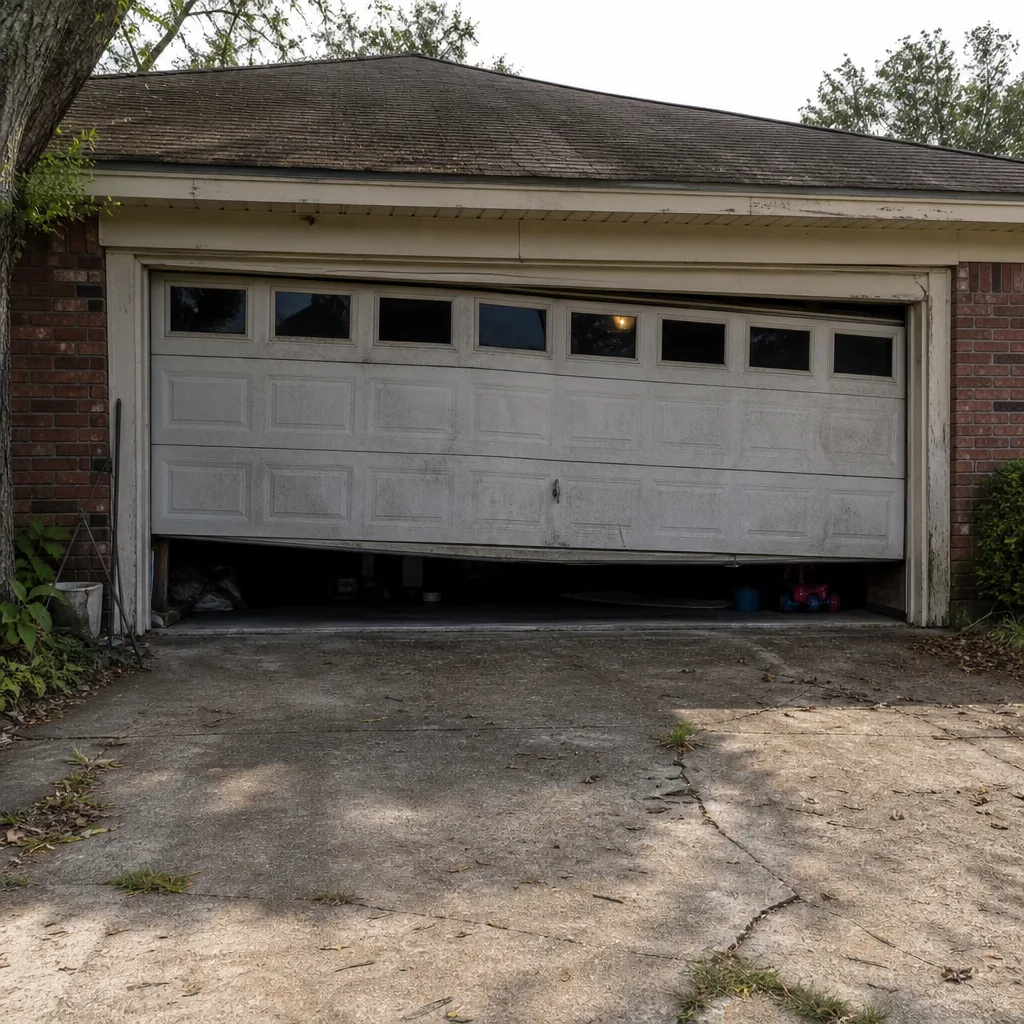 Before
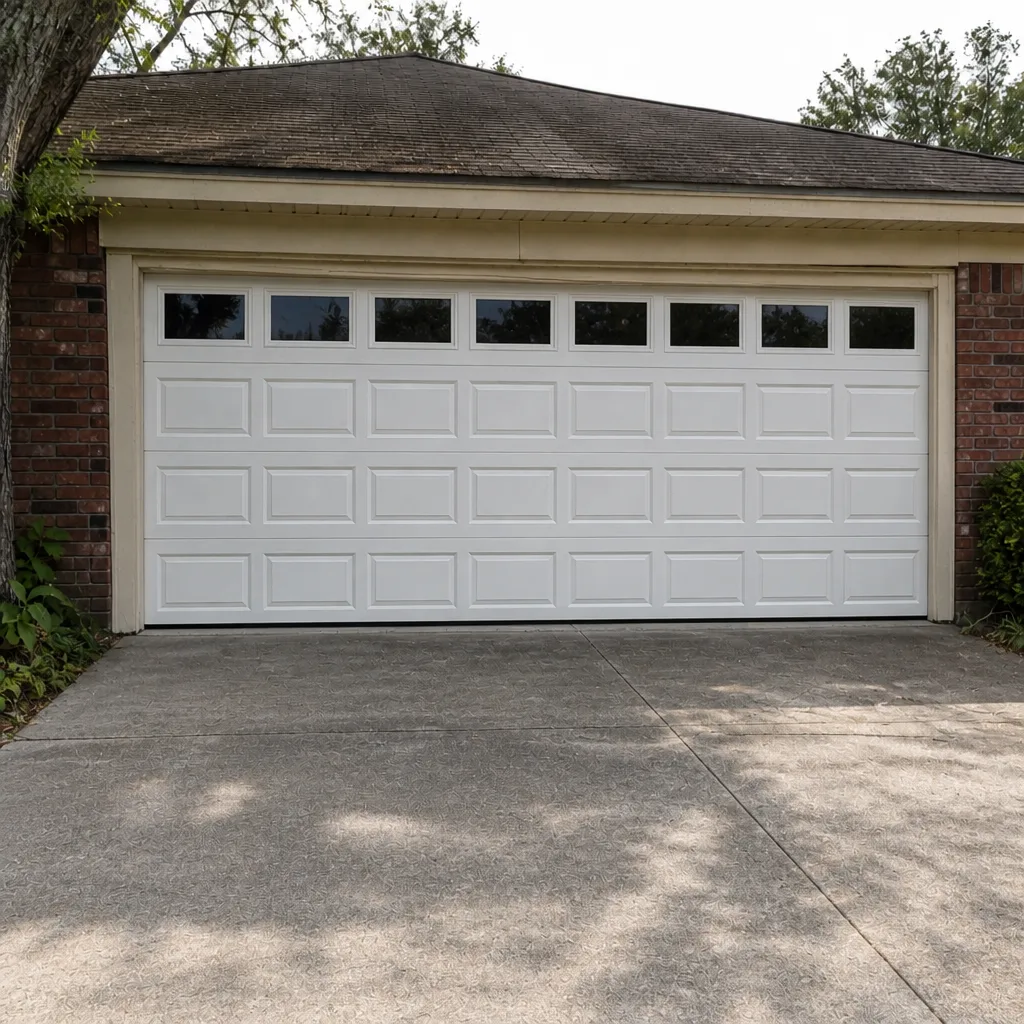 After
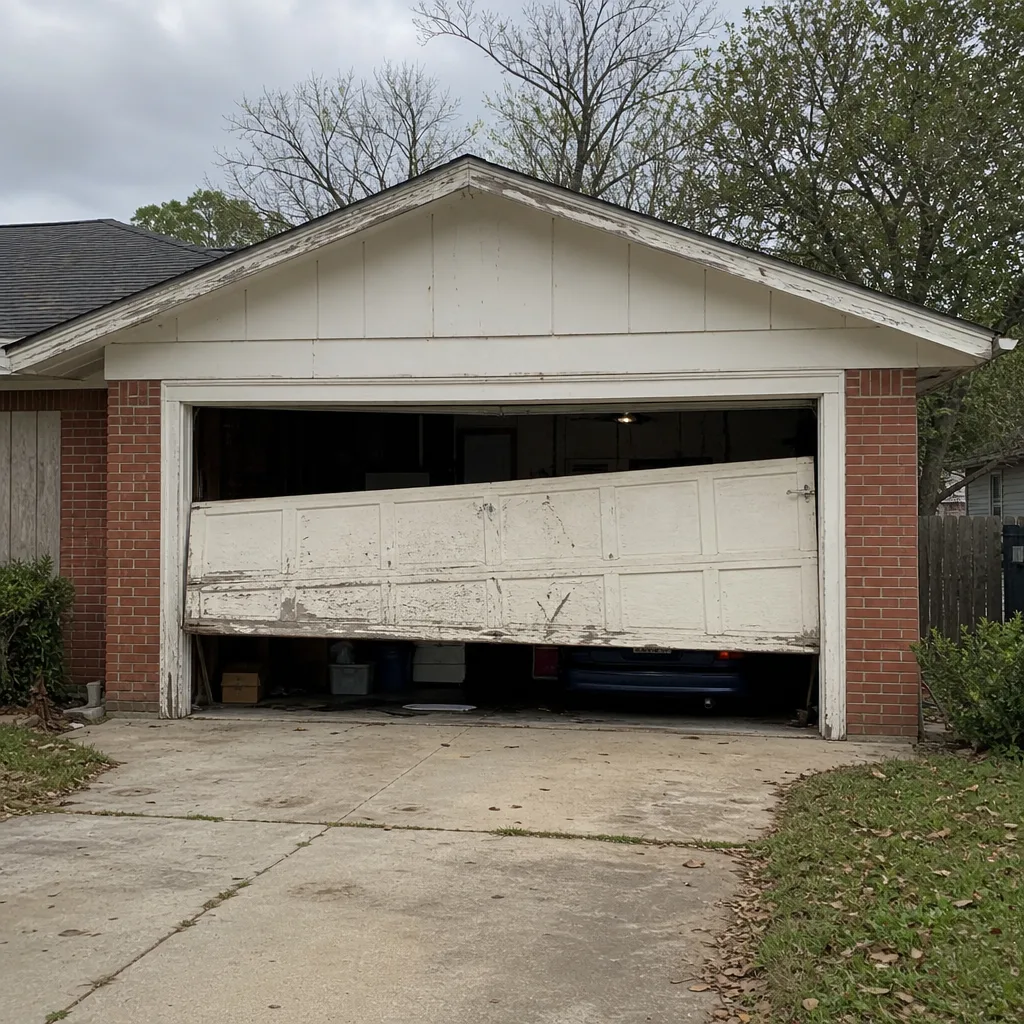 Before
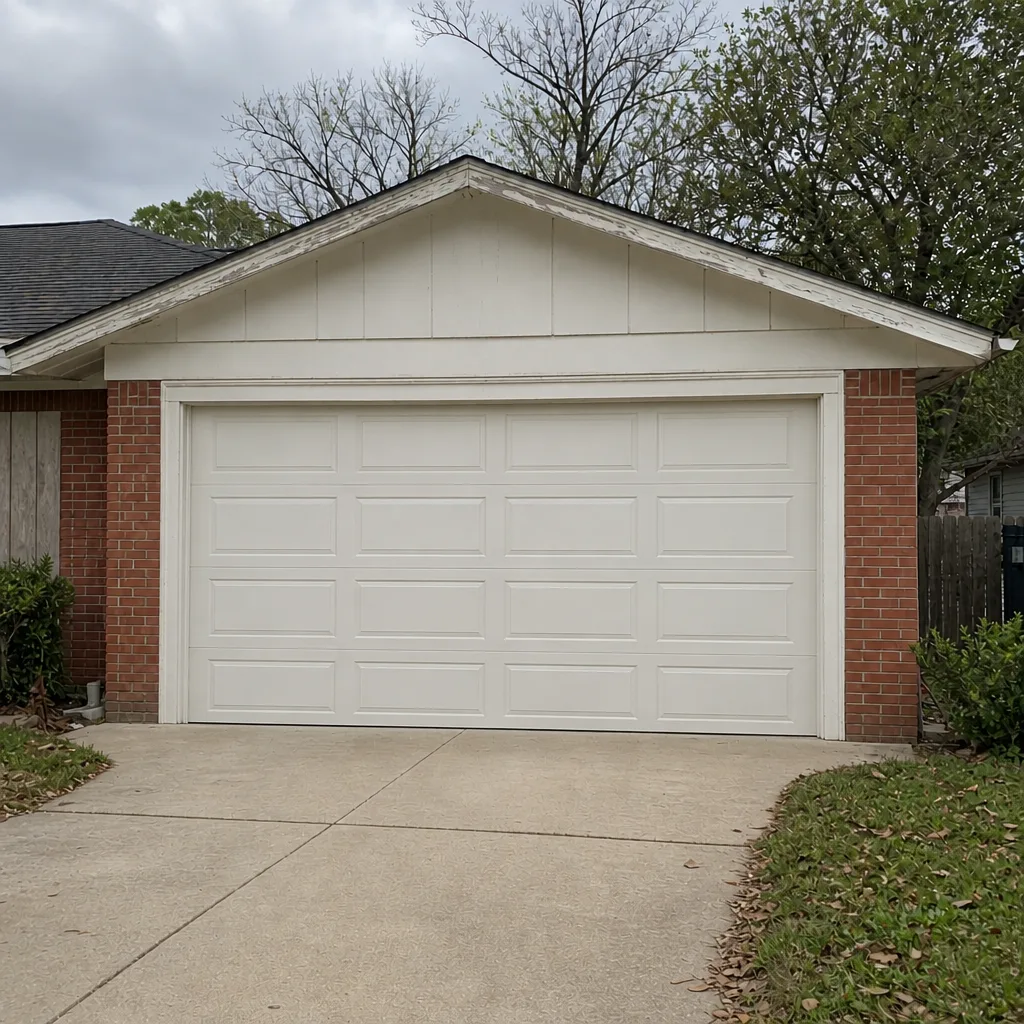 After
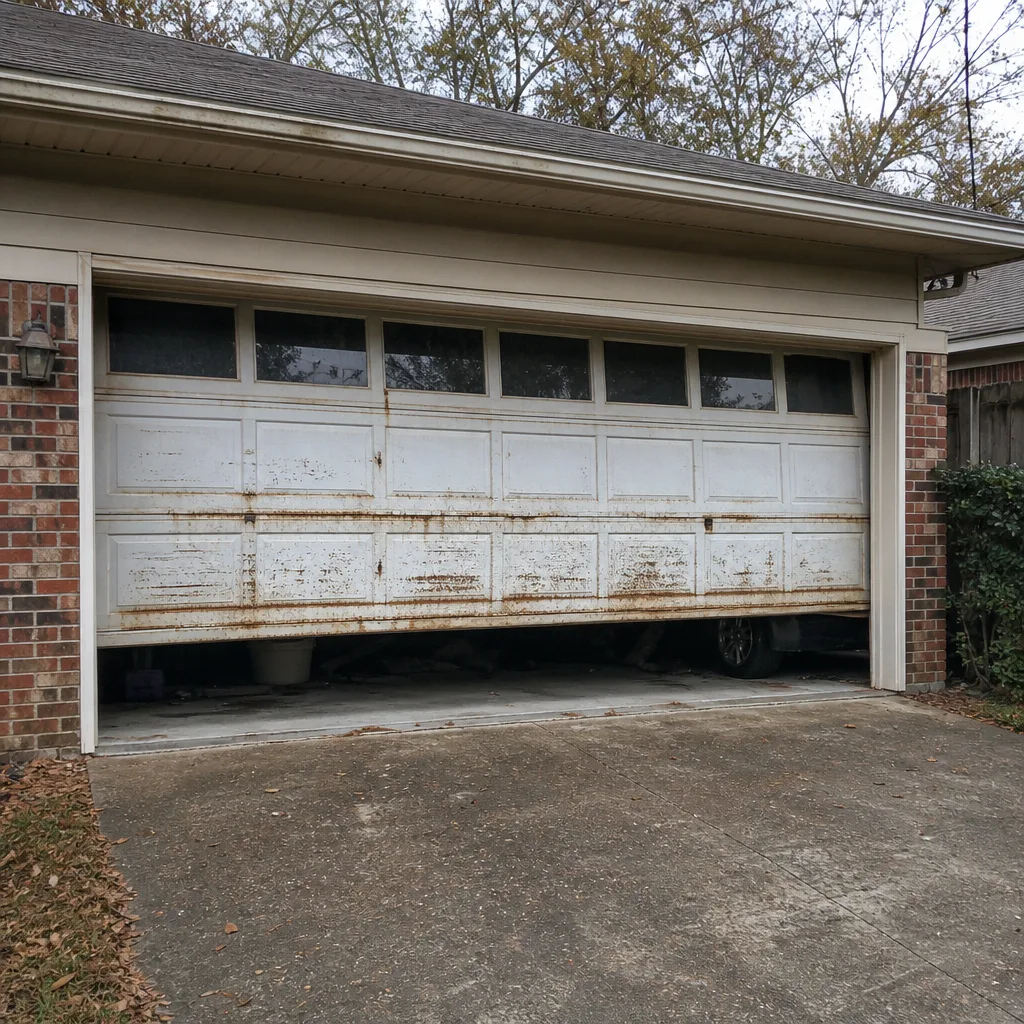 Before
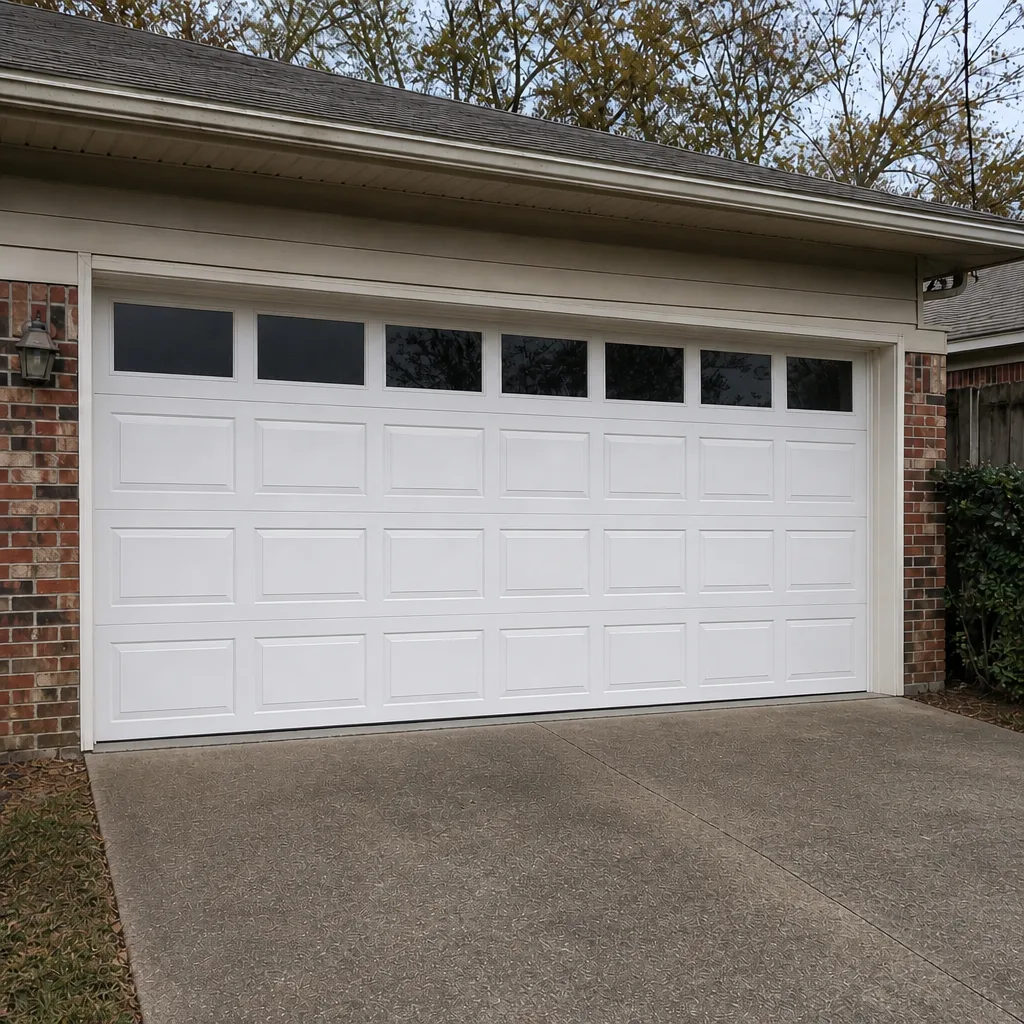 After
When to Call a Professional
Call a professional when the problem touches a spring, a cable, the bottom bracket, or an opener’s force and limit settings. Call us sooner if you see any of the following in Mobile: a door that won’t stay up when lifted halfway, a cable that looks frayed or slack, a loud snap followed by a door that won’t open, a reversal test that fails, a roller that has jumped the track, or a door that has gone crooked in the opening. A sudden sag or twist in the door usually points to a snapped spring or cable, and it shouldn’t be run until it’s looked at. If a door won’t open in a power outage and the manual release won’t engage, that’s a safety call too. When a door is beyond a simple fix, a full Mobile Garage Door Service visit covers repair, opener work, and replacement under one call, so you’re not hunting for a second contractor.
Mobile Garage Door Service offers free estimates in Mobile. Call (877) 367-4142 to get a technician dispatched to your driveway.
Frequently Asked Questions
Two to three times a year, timed to the seasons rather than the calendar. In Mobile, the key windows are before hurricane season, after the humid summer, and once during the cooler months. Each of those checks targets different problems: structure and safety before storms, rust and wear after the heat, and a deep clean in the cooler air. A quick monthly look at the rollers and the reversal test takes about five minutes and catches small problems early.
Silicone-based spray for hinges, rollers, and bearings, and white lithium grease for the opener rail and the track where the rollers ride. Standard WD-40 is the wrong product for this climate because it’s a solvent that dries out fast and attracts dust in Mobile’s humidity. Apply lightly, two or three times a year, and clean off old product before applying new.
No. Springs are under enormous tension and a wrong adjustment can cause serious injury, so this is work for a trained technician only. The same goes for cables, drums, and the bottom bracket where the cable attaches. What you can safely do is inspect for rust, fraying, or sagging and report what you see. Our technicians have up to 11 years of experience and know how to work around that tension safely.
Heat expands the metal track and changes the tension in the springs, so a door that balances perfectly at 70 degrees can feel heavier or lighter in the afternoon heat of Mobile. That’s why balance and reversal tests should be done when the door has warmed up. If the door is noticeably harder to lift or won’t reverse properly in the heat, have a technician check the springs and the opener settings.
Cable tension (visual only), anchor bolts on the track and torsion assembly, the manual release, roller seating, and the weather seal. The goal is to have the structure tight and the safety systems working before a storm, so nothing is left to fix on a rushed schedule. Do it while a technician can still get to you on a normal visit, and book a free estimate if anything looks off.
Yes. We service every major residential brand, including LiftMaster, Chamberlain, Genie, Clopay, Amarr, Wayne Dalton, Craftsman, and Raynor, covering the vast majority of doors and openers in Mobile. Because we’re brand-agnostic, we recommend the right fix for the equipment you already have rather than steering you toward a replacement you don’t need. Garage doors are all we do, and that focus is why we can diagnose a problem fast and get a door back up and running.
The Bottom Line
The maintenance that actually protects a garage door in Mobile is the maintenance you schedule around the seasons, not the calendar. Get the structure, cables, anchor bolts, and manual release tight before hurricane season. Watch springs and rollers for rust as the humidity peaks in late summer. Lubricate with silicone or lithium products, not standard WD-40. Test balance and reversal in the heat, when the door is working under real conditions. And draw a hard line at anything involving springs, cables, or opener force settings, which belong to a technician. Do that, and a door lasts years longer and fails far less dramatically. If you’re in Mobile and want a second set of eyes on what you found, we come to you and tell you honestly what needs fixing and what can wait. Call (877) 367-4142 for a free estimate. We answer 24/7. Fast dispatch from 7am to 7pm, Sunday through Friday.
Written by the team at Mobile Garage Door Service.