
Last updated November 15, 2026
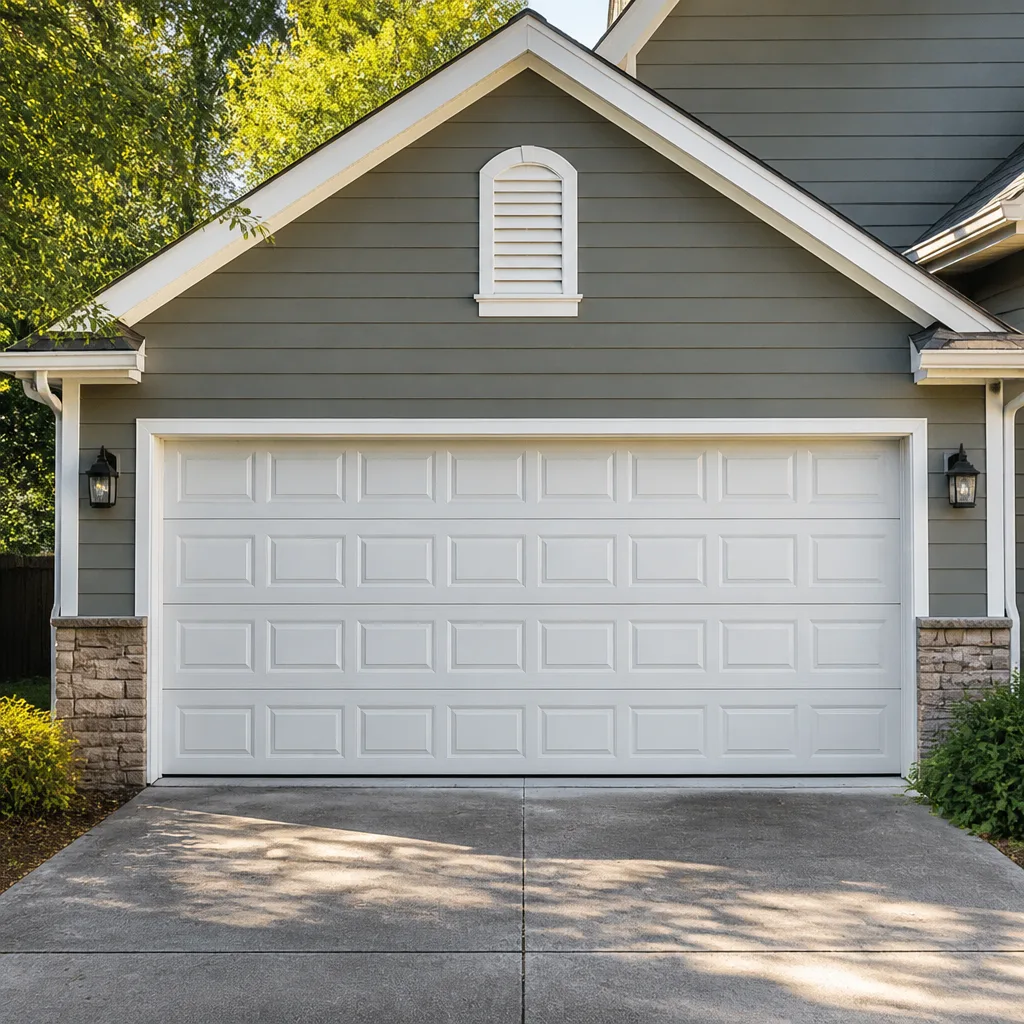 Raised-panel steel
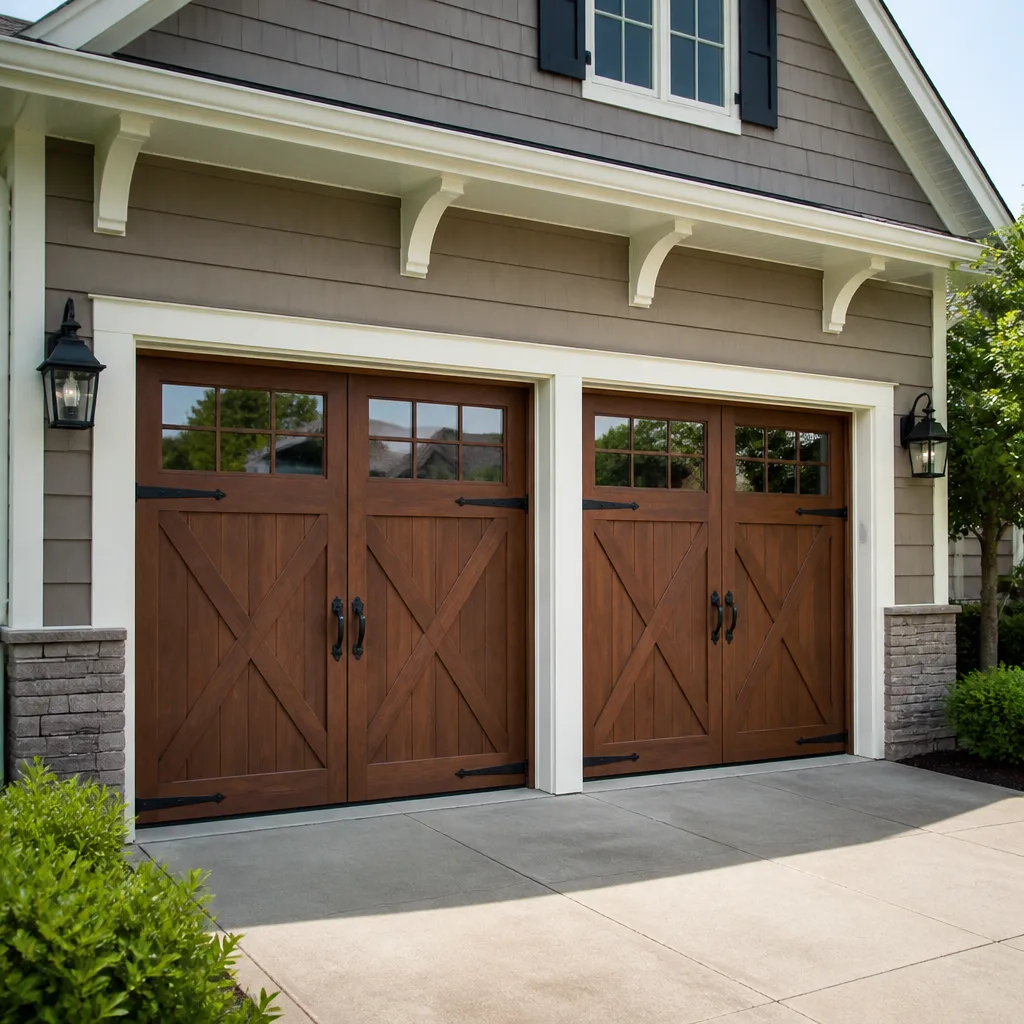 Carriage house
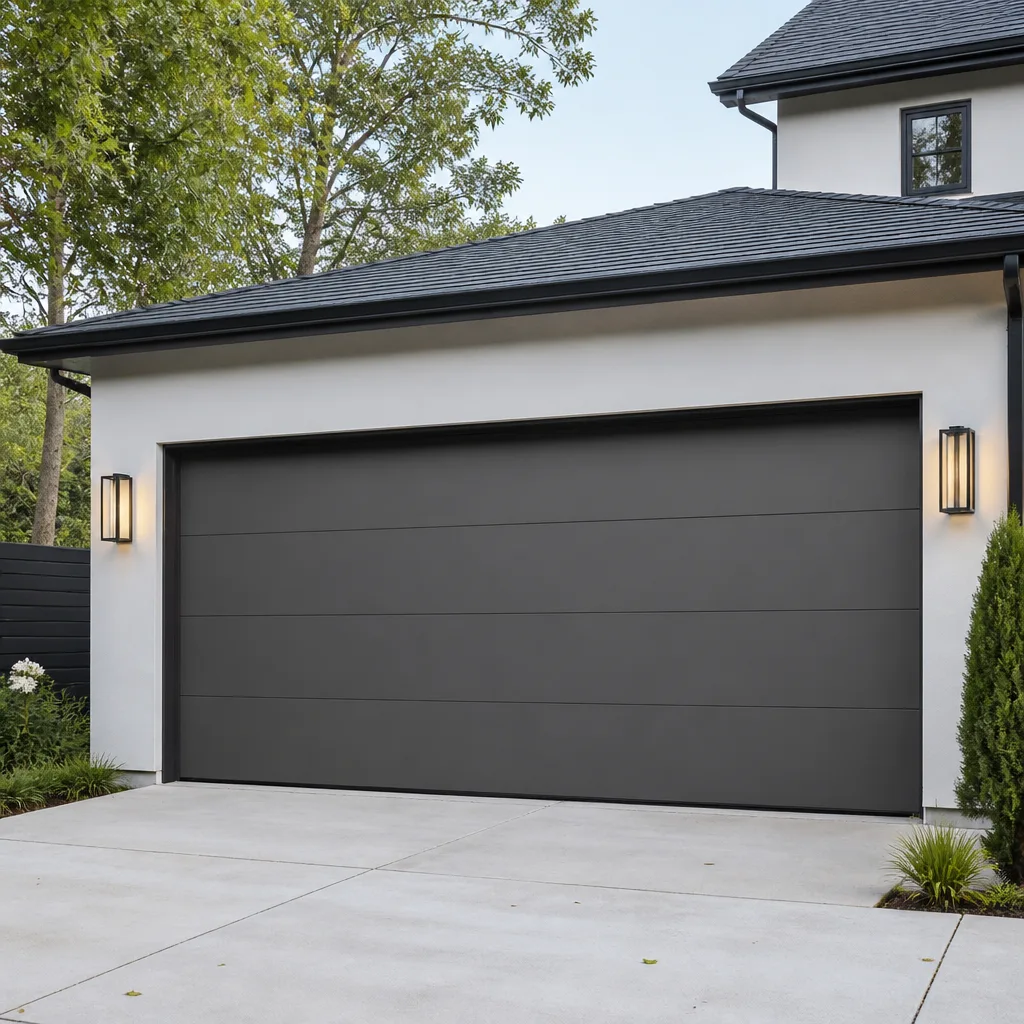 Modern flush
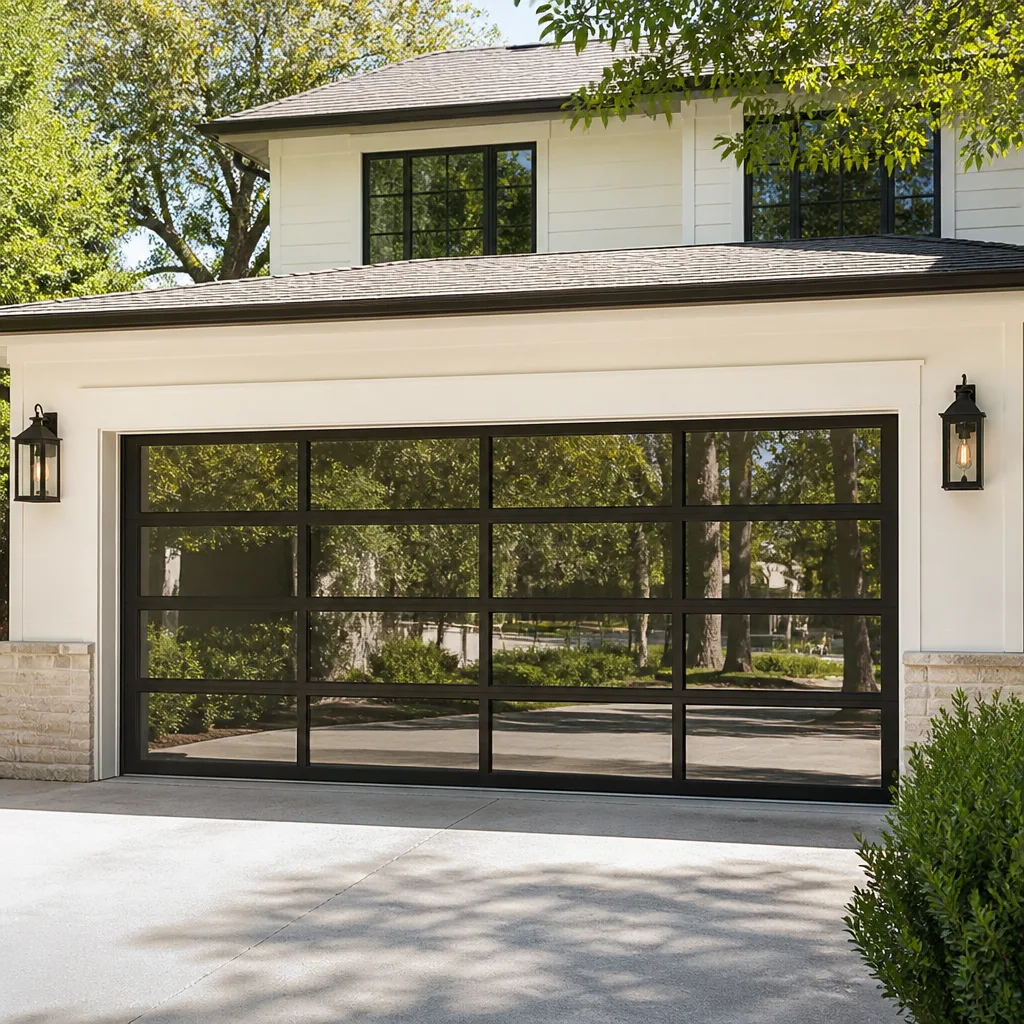 Full-view glass
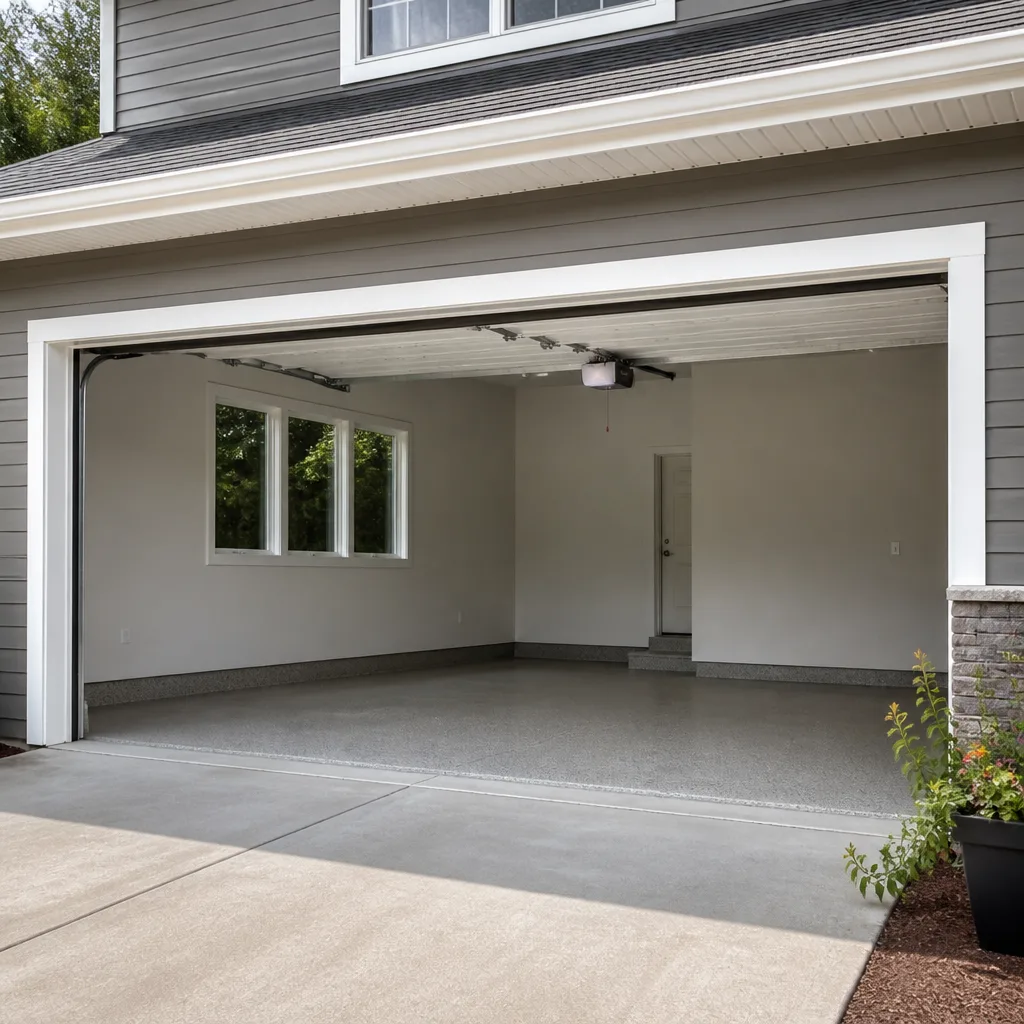 LiftMaster openers
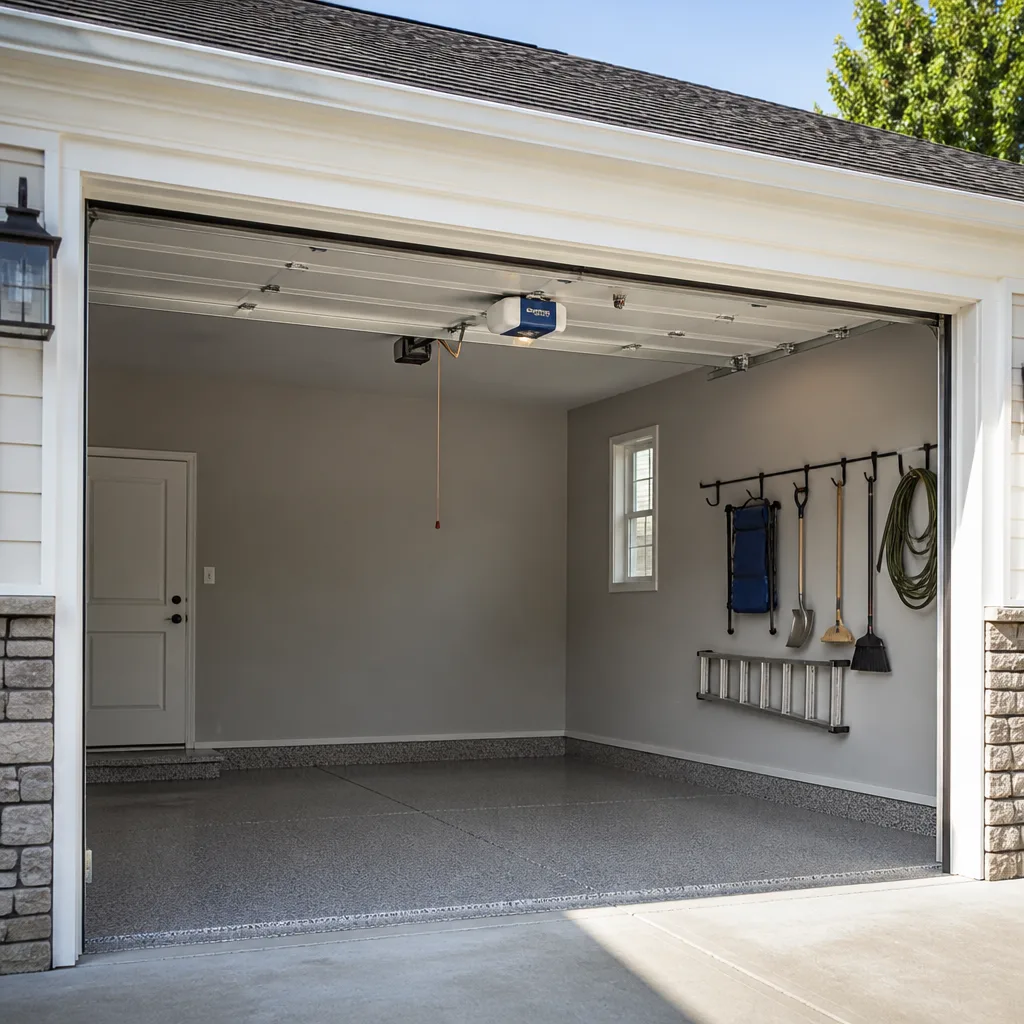 Chamberlain openers
Full 25-point door and opener safety check with every visit - springs, cables, rollers, tracks, and your LiftMaster or Chamberlain opener included
You get a price before we start. It does not change when the pro arrives.
Get your free estimateGarage Door Warning Signs: A Mobile Homeowner’s Reference Guide
That grinding noise your door makes on a cold morning isn’t the same problem as a grinding noise that starts in August. Temperature and humidity change what a garage door sound means, and they change what the fix involves. Most guides to garage door warning signs were written for a dry climate. They talk about dust and heat but skip the two forces that shape door problems in Mobile: heavy summer humidity and strong sun. This reference covers the signs Mobile homeowners actually see, how to read them correctly, and when a door that “mostly works” has become a liability. We’ll walk through rust patterns, binding panels, opener behavior, weatherstripping wear, and the safety checks most people never make.
Quick Answer
A failing garage door usually warns you weeks before it stops working. Watch for grinding or popping sounds, rust that spreads on springs and cables, panels that bind or scrape, an opener that runs slower or stalls mid-travel, cracked weatherstripping, and a door that won’t stay level or reverses without cause. In Mobile’s humid climate, rust and swelling are the two biggest warning signs, and any noise paired with visible corrosion is your cue to have the door looked at before something breaks.
Styles & brands we work with
- Raised-panel steel
- Carriage house
- Modern flush
- Full-view glass
- LiftMaster openers
- Chamberlain openers
Table of Contents
- What the Sounds Are Telling You
- Rust on Springs and Cables: Surface or Active Corrosion?
- Binding Panels vs. Track Misalignment
- Opener Behavior: Heat, Load, or Motor Failure
- Weatherstripping Wear in Mobile’s Sun and Rain
- The Safety Checks Most Homeowners Skip
- A Seasonal Checklist for Mobile Doors
- Common Mistakes to Avoid
What the Sounds Are Telling You
A new sound from your garage door is data, not just noise. Where it starts, when it starts, and which part of the cycle it happens in all narrow down the cause. A grinding sound on a cool, dry morning usually points to metal-to-metal contact that’s tight when parts are contracted. The same sound appearing during Mobile’s humid months more often means swollen wood or rusted rollers under load. Same noise, different root, different fix.
Listen for these specific patterns:
- Grinding that starts and stops. Rollers or hinges need lubrication, or rust is dragging on the track. If it’s weather-linked, note which season it shows up in.
- A rhythmic pop or snap. A spring is under stress or a cable is fraying. Treat this one as a stop-and-call situation.
- Squealing on the opener. Worn opener gears or a dry drive screw. Often resolved with proper service, not replacement.
- A bang when the door hits the floor. The door is coming down too hard, which stresses the whole track and opener over time.
- Rattling overhead. Loose fasteners or a track that’s pulled away from the frame.
Temperature and humidity matter here because the door is a sum of moving parts that expand and contract at different rates. Metal reacts fast; wood and vinyl sections react slowly and absorb moisture. That mismatch is what makes a door noisy in one season and quiet in another. If your door only complains at certain times of year, that’s a clue for the technician when garage door repair is on the schedule. Write down when the sound appears before you call. Details like that speed up the diagnosis.
Rust on Springs and Cables: Surface or Active Corrosion?
Not all rust is urgent. Some is cosmetic, and some is the first sign of a spring or cable that’s losing strength fast. The difference is where the rust lives and how it looks. Springs and cables are the parts that hold the entire weight of the door, so it pays to know what you’re looking at. Visual rust is a warning; active corrosion is a deadline.
Here’s how to read it:
- Light surface rust (orange-brown haze on a spring). Common in humid climates, usually cosmetic early on. It won’t break a spring overnight, but it should be watched.
- Rust that marks the coils and spreads to the cable. The spring is degrading and the cable is losing its temper. Have a professional inspect it.
- Pitting, dark orange patches, or flaking. Active corrosion. The metal has lost material. This is a replace-now situation, not a watch-it category.
- Rust clustered near the connection points. Fasteners and end-fittings. A weak point where failure tends to start.
- Rust on the door itself, especially bottom edges. Rain and ground moisture pull it down. Check the lowest panels first.
Safety note: never touch, test, or try to turn a torsion spring or cable. They hold thousands of pounds of tension. A corroded spring that snaps while you’re near it can cause serious injury. That’s one of the reasons we recommend a trained technician for anything involving springs and cables. What you can safely do is look, and note what you see.
In our experience, the doors in Mobile that go the longest without a checkup are the ones where the spring is quietly rusting behind the door panels. If you can’t easily see your springs, that alone is a reason to have the door inspected once a year. A technician can spot corrosion on a spring that you’d never notice from the ground.
Binding Panels vs. Track Misalignment
A door that drags, scrapes, or jerks as it rises can be binding on its own panels or running on track that’s moved out of true. These look similar from the driver’s seat and are completely different fixes. Misread one for the other and you can spend money adjusting track when the real problem is a swollen wood section that needs attention instead.
Run this check, carefully and with the door free, to tell them apart:
- Look at the gaps. Move the door up a foot or two and check whether the gap between the door and the track is even on both sides. A widening gap on one side points to track misalignment.
- Note the rhythm. A scrape that repeats at the same point in every cycle suggests a panel edge catching a track or hinge.
- Look for swelling. In Mobile’s humidity, wood and some composite panels absorb moisture and expand. A door section that swells can press against the track and mimic a misaligned rail. Look for gaps that open up after a wet stretch and close after a dry one.
- Test the balance. Pull the release handle with the door closed, then lift it to waist height by hand. If it stays put, it’s balanced. If it will not hold, a spring is tired or the door is binding.
- Watch the edges in motion. Anything that rubs a track or brushes a jamb tells you which side the problem is on.
If swelling is the cause, adjusting the track just fights the symptom. The door needs the source of the moisture addressed, not the rails torqued further. If the track has genuinely shifted, that’s a straightforward adjustment. Getting the diagnosis right is something we do on nearly every visit, and it’s why Mobile Garage Door Service comes to the door rather than asking you to guess over the phone.
Opener Behavior: Heat, Load, or Motor Failure
When a door starts acting strange, most homeowners blame the door. Often the real culprit is the opener, and Mobile’s summer heat plays a part. The opener is mounted to the garage ceiling, where the attic air cooks it in July and August. Heat can make a motor that’s simply tired stall mid-cycle, and it can trip a thermal cutoff on a unit that’s really fine. Cooling down and trying again tells you a lot.
Here’s how to sort a hot-weather stall from an actual opener failure:
- Stalls only on very hot days. If the opener fails in the afternoon and recovers by evening, heat is likely the trigger. That doesn’t mean it’s harmless. It means the motor is being pushed to its limit.
- Runs slower overall, summer and winter. The motor or the gearing is wearing. This is a failure trend, not a weather event.
- Stops mid-way, then closes normally on the next try. Could be a binding door putting extra load on the opener. Fix the binding and the opener may settle down.
- The opener runs but the door does not move. Something has disconnected. Check the release, but don’t force it. That’s a call.
- Remote only works from up close. Logic board or antenna issue, or a battery in the remote.
If you have a Chamberlain or Genie opener and it starts misbehaving suddenly after months of silence, that history matters. It’s easy to jump to “the motor is dead” when the real cause is the load it’s pulling. Our technicians work on these openers because the door and the opener are two halves of one system. During garage door opener repair, they check the door’s balance first before they blame the motor. That habit saves a lot of unnecessary replacements.
Weatherstripping Wear in Mobile’s Sun and Rain
Weatherstripping is the rubber or vinyl seal around the door’s edges and along the bottom. It’s the part that takes the most abuse and gets the least attention. In Mobile, that abuse comes from two directions: strong sun that dries and cracks the seal, and heavy rain that pushes water past it if it’s failing. A worn seal doesn’t just let water in. It lets heat in, lets pests in, and lets your cooling system work harder.
Look for these signs along the bottom seal, sides, and top:
- Cracking along the curve. The bottom seal is the first to go. Look for splits along the fold where it meets the floor.
- The seal that’s stiff, hard, or brittle. Sun exposure cures the rubber until it stops flexing. If you press it and it doesn’t spring back, it’s done.
- Water marks on the garage floor after rain. A clear sign the bottom seal or side weatherstripping is letting water in.
- Gaps at the corners. The four corners of the frame are where seals pull away first.
- Visible daylight under a closed door. If you can see light, water and air get through too.
- Discoloration or a chalky film. Sun damage. The seal is breaking down from the outside in.
Replacing weatherstripping is one of the least expensive ways to protect a garage door and the space behind it. It’s also a job worth doing before the problem spreads to the door panels themselves, because once water is drifting in, dampness gets into the bottom sections and starts the swelling cycle we covered above. If you’re unsure whether the seals have gone too far, a quick on-site look will answer it. That’s the kind of thing we check whenever we’re in a driveway around Mobile.
The Safety Checks Most Homeowners Skip
A door that “mostly works” can still be a real problem. Two failures cause the most trouble: a door that won’t balance and safety sensors that don’t actually work. Both are easy to ignore because the door seems to function. Both are worth checking on a schedule, and both are common in homes where the door hasn’t had a professional look in years.
Here’s what to check and how often:
- Balance test, once a month. With the door closed, pull the release, lift the door to waist height, and let go. A well-balanced door holds its position. A door that drifts or slams down has a tired spring or a serious weight problem. Don’t keep using it.
- Photo-eye test, once a month. Close the door and pass a hand or a box through the beam near the floor. The door should reverse immediately. If it doesn’t, don’t use the opener until it’s fixed.
- Auto-reverse force test, every few months. Lay a piece of wood or a roll of paper towels flat on the floor under the door. When the door meets it, it should reverse. If it keeps pressing down, the force setting is too high.
- Visual check of springs and cables, every few months. Look for rust, fraying, or sagging. Don’t touch. Just look and note.
- Roller and hinge check, twice a year. Rollers should turn freely. Hinges should move without dragging. Worn rollers are noisy and put extra load on the opener.
The balance issue deserves a straight word. A door with a tired spring can come down hard or drop suddenly, and that’s a genuine hazard, especially for kids or pets underneath. A Clopay or Amarr door that’s been beating up its opener for months is a sign to stop and get it seen. Fallen tension in the springs doesn’t fix itself.
Safety note: don’t try to adjust springs, force settings, or the safety sensors’ alignment yourself if you’re not confident. Electrical components and spring tension are two areas where a small mistake can cause serious harm. A trained technician can check these and confirm the door is safe to use.
A Seasonal Checklist for Mobile Doors
Mobile has a rhythm. Humidity builds through the spring and summer, the sun is intense for months, and the fall brings cooler mornings that make every metal part on the door react. Spreading one set of checks across the year catches most of the issues in this guide before they turn into repairs.
- Early spring: Walk around the door and look for rust, cracks in the weatherstripping, and any gap under the bottom seal. Wipe down the springs and cables and look for fresh corrosion.
- Midsummer: Watch the opener on hot afternoons. Any stall, slow run, or odd sound is worth noting. Listen for the grinding that starts when the humidity is high. That’s the strongest signal of swelling or a rusted roller.
- Early fall: Repeat the balance test and the safety sensor test. Listen for new noises on cool mornings that weren’t there in summer. See if the door runs more smoothly or less smoothly than it did in July.
- Before the first heavy rain of the cooler months: Check side and bottom seals for gaps. Water finds those gaps fast.
The goal isn’t to turn you into a technician. It’s to notice change. A door that runs the same way every season is in decent shape. A door that tells you a different story each season is asking for a look.
Common Mistakes to Avoid
- Ignoring a noise because the door still opens. A door that works but complains is the one that fails next. Plenty of repair calls start with “it was making that sound for a while.”
- Spraying everything that moves with lubricant. Grease on a roller that needs replacing or on a track that’s out of true just hides the problem. Use the right product in the right place, or leave it to the technician.
- Adjusting the track to fix a swelling door. In Mobile’s humidity, a wood door that swells against the track will keep swelling until the moisture source is handled. Adjusting track alone doesn’t fix it.
- Testing safety sensors with a child or a pet. Use a box or a hand. The sensor test is meant to be done with a solid object, not something that can move suddenly.
- Replacing the opener when the door is the problem. A binding door loads down the motor and trips it. Swapping the opener doesn’t fix the door, and the new one stalls too.
- Skipping the annual spring and cable inspection. Springs rust slowly in a humid climate. A quick professional check catches corrosion long before a break.
- Assuming a coastal-style problem when it’s just heat and humidity. Mobile’s door wear is driven by sun, rain, and damp air, not salt spray. Reading the signs through the right lens saves wasted effort.
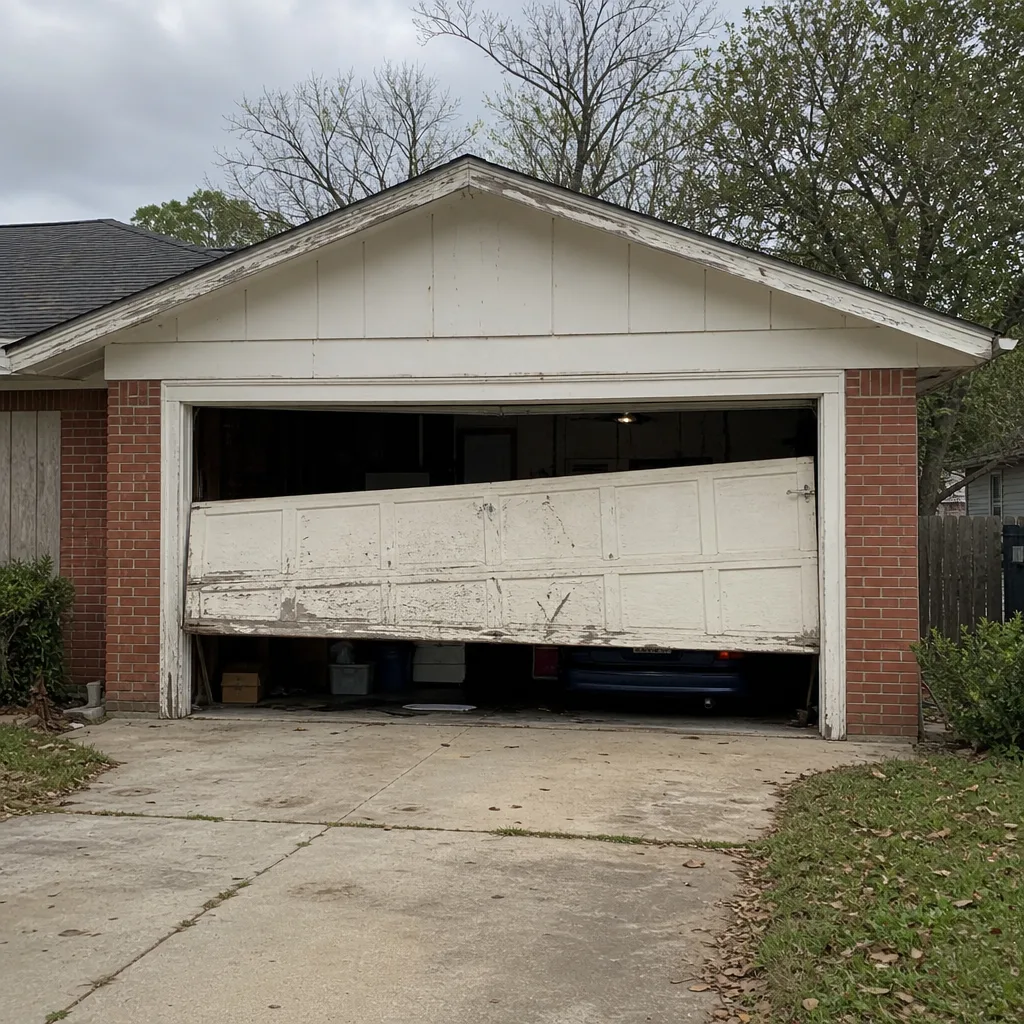
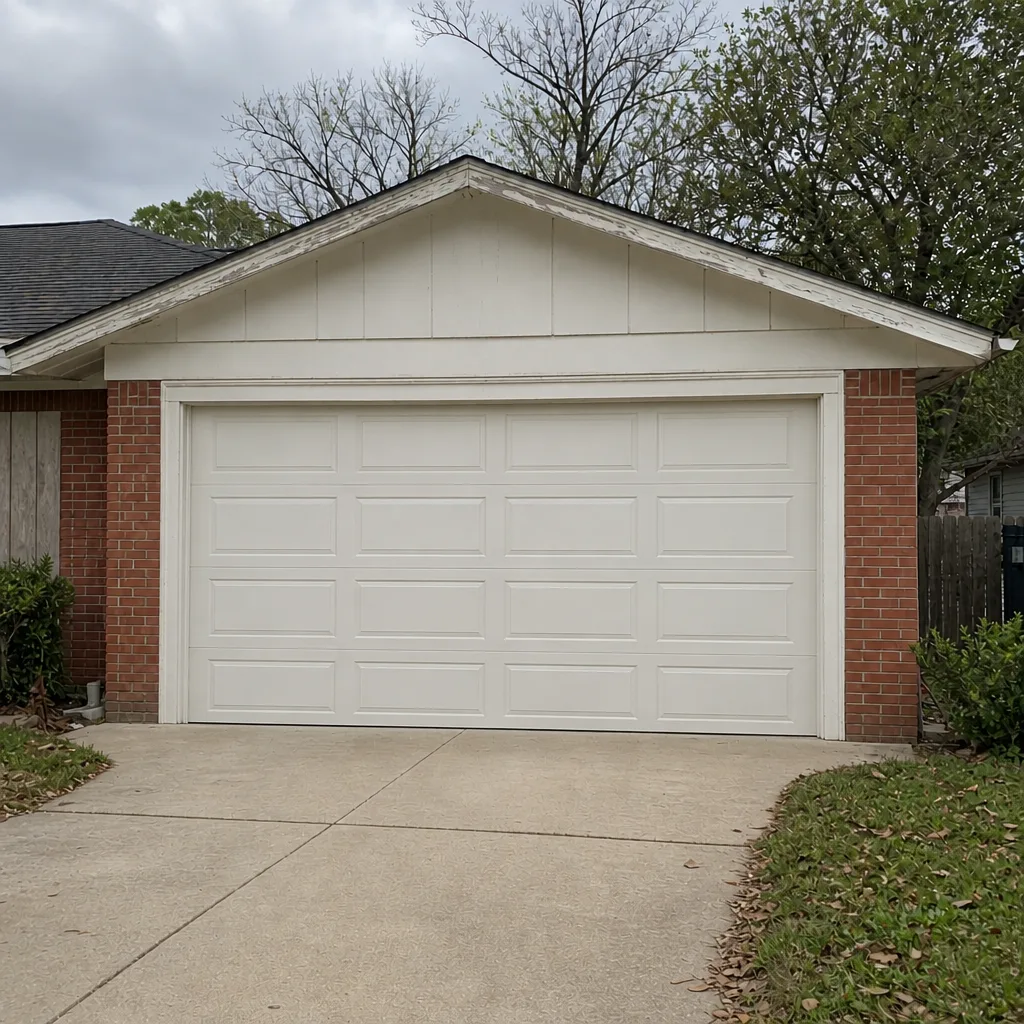
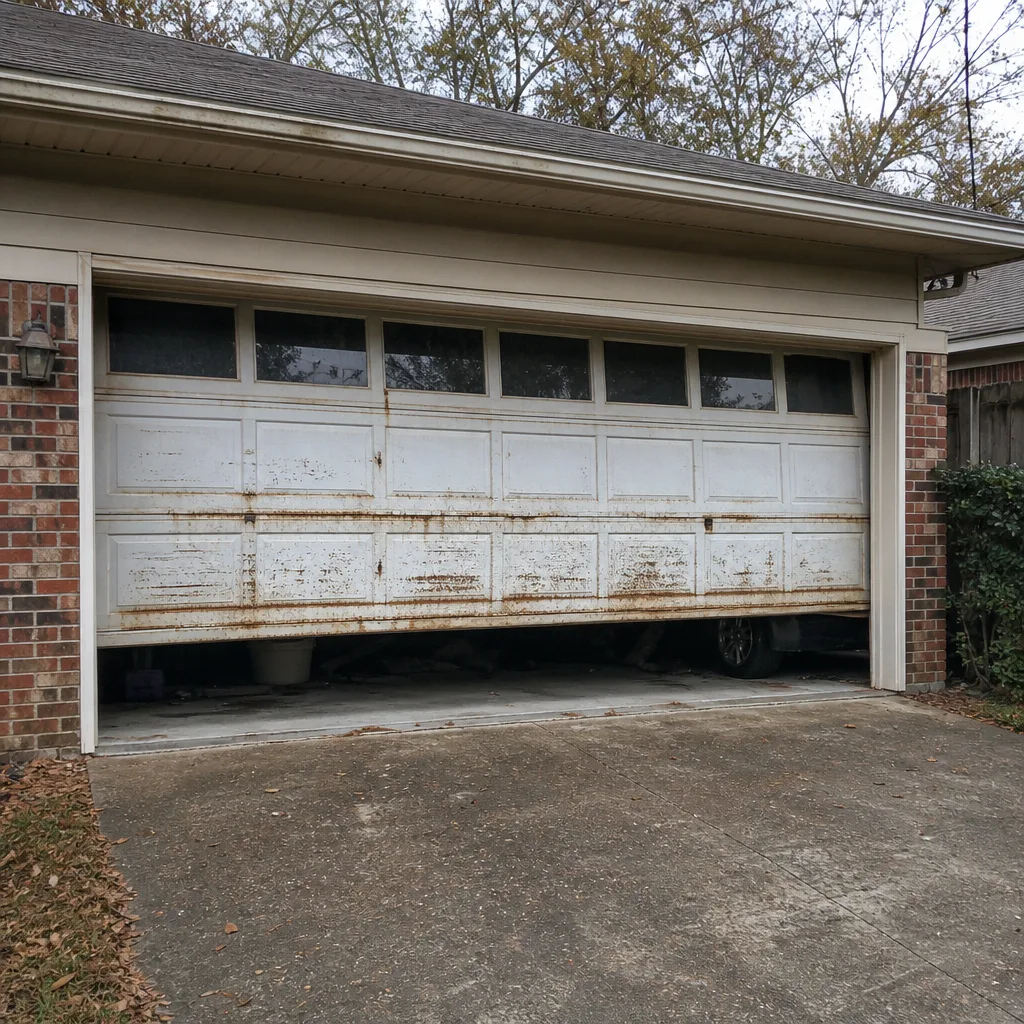
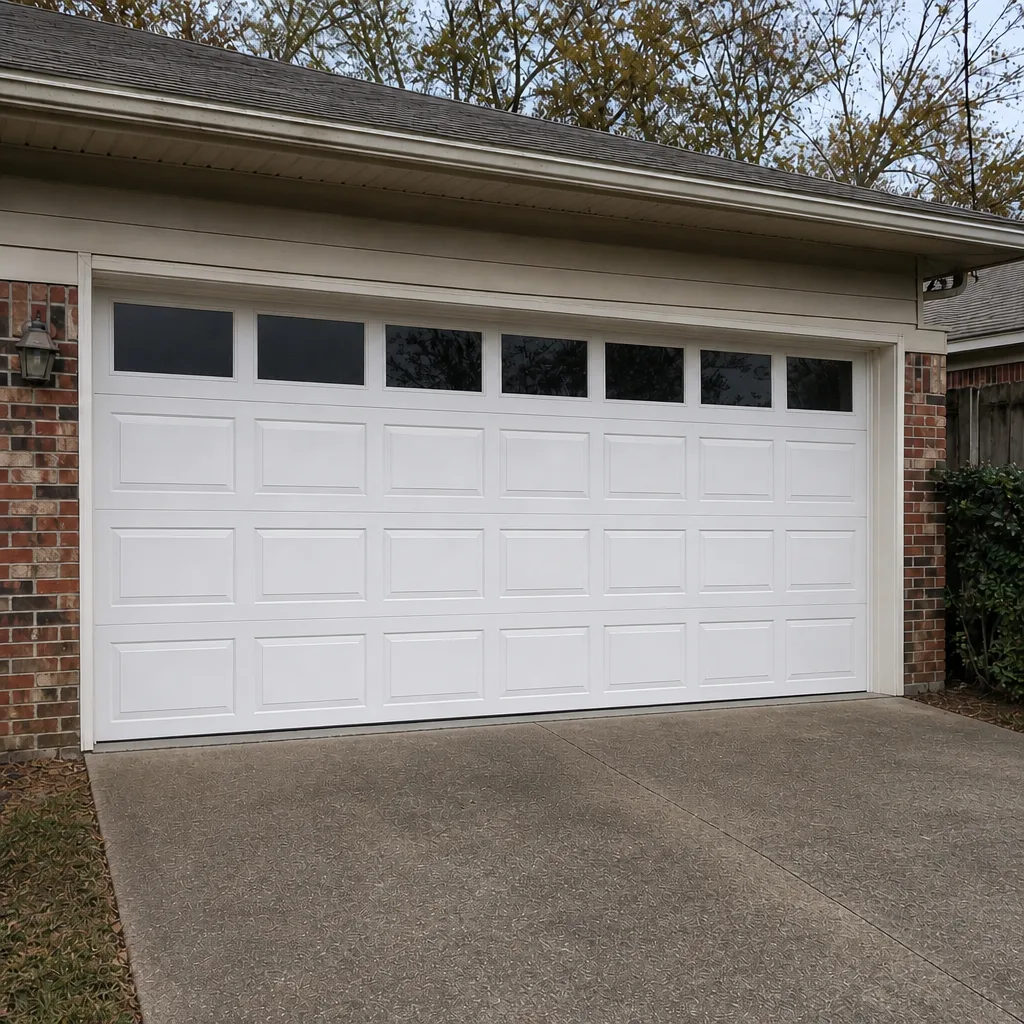
See the difference
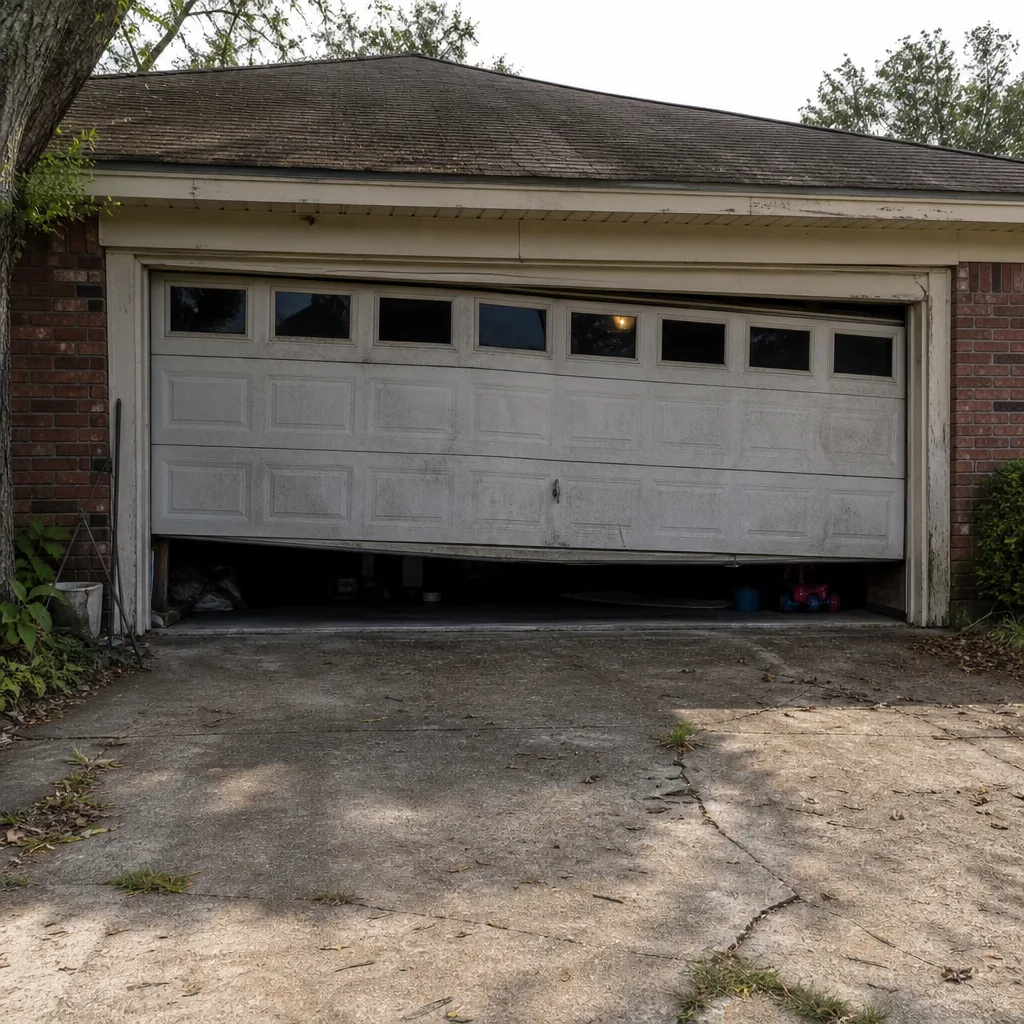 Before
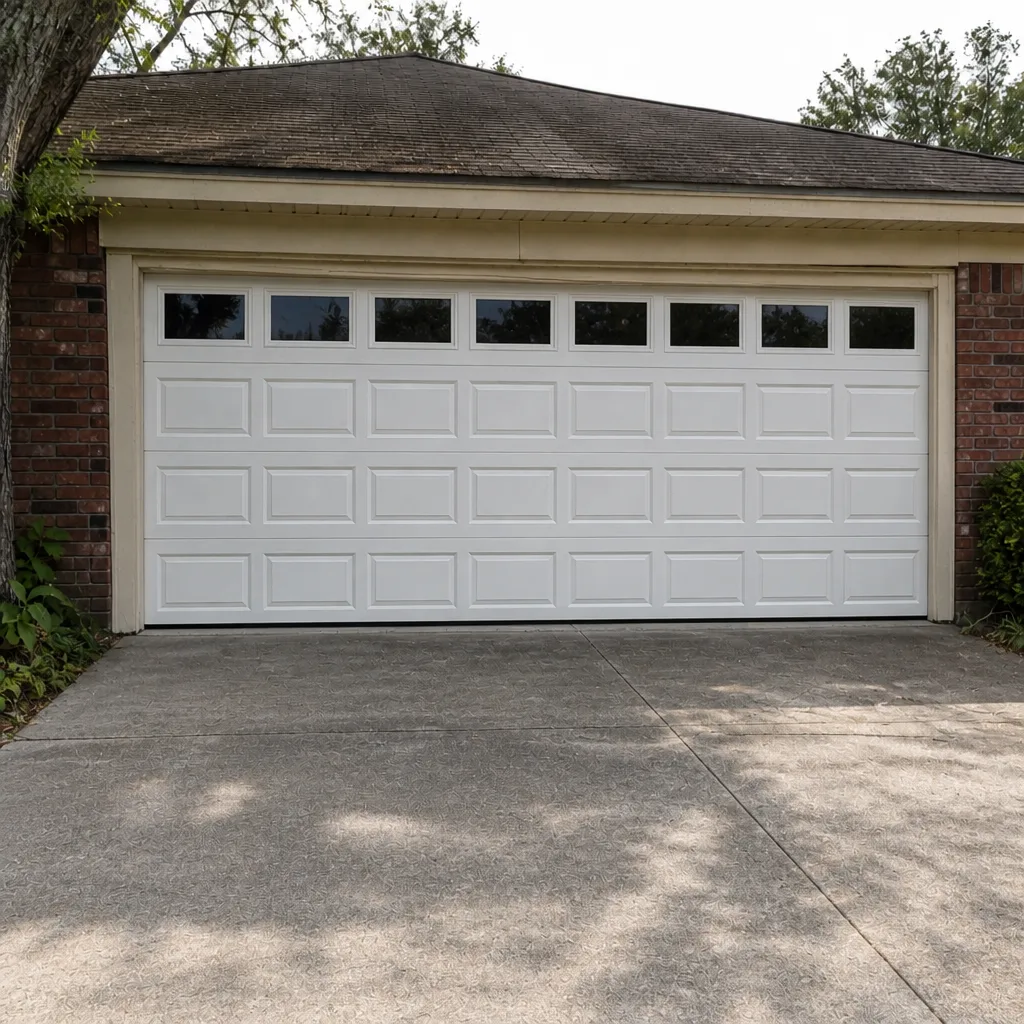 After
 Before
 After
 Before
 After
When to Call a Professional
Some problems you can live with. Others need a technician. Call us if the door has a grinding or popping sound you can’t pin down, any rust that’s pitted or flaking on a spring or cable, a door that won’t hold position in the balance test, or a sensor that doesn’t reverse when you test it. Call us if the opener stalls, runs slowly, or stops mid-travel, or if water is coming in under a closed door. If a spring has gone completely slack or a cable has visibly snapped, don’t use the door.
Mobile Garage Door Service offers free estimates in Mobile. Our technicians have up to 11 years of experience, and we work with whatever brand you have, from Chamberlain and Genie openers to Clopay and Amarr doors. We answer 24/7. Fast dispatch from 7am to 7pm, Sunday through Friday. Call (877) 367-4142.
Frequently Asked Questions
Once a year is the typical recommendation for a professional inspection, with your own visual checks once a month. Mobile’s humidity and sun make annual inspections especially worthwhile because rust and swelling both move slowly and are easy to miss until they cause a failure. During the year, your own checks should cover the balance test, the safety sensor test, and a visual look at the springs and weatherstripping. Call (877) 367-4142 for a free estimate if you spot anything that worries you.
Yes, and in a humid climate, louder is a clue rather than a nuisance. Humidity swells wood and composite panels, dries out rollers, and lets rust bite into springs and cables, all of which make the door noisier. The noise itself isn’t the problem, but what it signals is. If the door gets noisier through a wet season, have it checked. Call (877) 367-4142, and we’ll take a look and tell you what’s causing it.
Surface rust is a light orange-brown haze and usually cosmetic early on. Active corrosion is pitting, dark patches, or flaking on the spring or the nearby cable. Surface rust deserves watching; pitting and flaking deserve a professional inspection quickly. Don’t touch a torsion spring or cable even if it looks fine, because the tension in those parts is dangerous. Call (877) 367-4142 for an estimate if you’re unsure what you’re seeing.
No. Grinding can be as simple as dry rollers or a rusty hinge that needs lubrication or replacement. It can also be a sign of a worn roller that’s about to seize or a track that’s out of line. The cost depends entirely on which part is grinding and why. Call (877) 367-4142 for a free estimate so we can identify the actual problem before you spend a dollar.
Sometimes, but the fix is usually about the source of the swelling, not the door’s movement. A wood section that swells in the heat will drag against the track no matter how the track is adjusted. Replacing weatherstripping, reducing moisture around the door, and checking the balance are the first steps. If the drag keeps coming back, call (877) 367-4142 for a free estimate and we’ll figure out what’s really going on.
Stop using the opener until they’re fixed. A failing safety sensor means the door could close on a child, a pet, or an object without reversing. That’s a risk that isn’t worth the convenience of a working door. Call us and we’ll check the sensor alignment, the wiring, and the opener’s settings. Call (877) 367-4142. Estimates are free.
The Bottom Line
Garage doors give you warnings. Rust, noise, binding, and opener trouble all show up well before failure, and in Mobile’s humid climate they show up differently than they do in dry-climate guides. Watch for rust that’s pitting, not just hazy. Notice when a door gets noisier in wet weather. Test the balance and the safety sensors on a schedule. A door that “mostly works” isn’t the same as a door that’s safe. When something doesn’t feel right, get a trained set of eyes on it. That’s how you keep a door working and a driveway safe.
Call (877) 367-4142 for a free estimate. We answer 24/7. Fast dispatch from 7am to 7pm, Sunday through Friday.
Written by the team at Mobile Garage Door Service.